

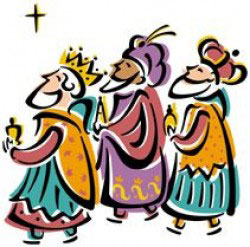
 Children in Spain are, without doubt, some of the most indulged in the world when it comes to Christmas! Tradition dictates that presents are given when the Three Kings arrive from the East–the evening of the 5th of January, but with the effect of globalisation some Spanish children have realised that Father Christmas can be persuaded to visit on December 24th as well! Thus their poor long suffering parents have to cough up for a selection of gifts twice. However, not all parents give in and the Three Kings still reign in the majority of households.
Spanish Christmas celebrations are rather different from those of the UK. Noche Buena (Christmas eve) is a big family celebration with a huge meal (prawns definitely compulsory). The kids then go out to a disco or party but Christmas Day itself is a fairly low key rest day. Noche Vieja (New Years Eve) is another big do with family meals, the 12 grapes at midnight, and then the party or disco. But the eve of the Three Kings (Reyes Magos ) is the big night.
The kings themselves Baltasar, Melchor and Gaspar, arrive in villages and towns all over Spain around mid evening. They arrive on highly decorated floats and travel through the streets throwing out great handfuls of sweets to the waiting children (Cabalgata de Reyes). Some well organised children arrive for the parade with several plastic bags and go home with them full! The three Kings parade is normally accompanied by one or more Marching or Town bands.
It’s a big family occasion and after the parade all will go home to put out the refreshment for the Kings and the camels, as we do for Santa and the reindeers. The children also put their shoes outside their bedroom door to indicate where they are. Then the long wait for the next morning to see if they have been good enough to get the items on their Three Kings “wish list” which is normally written at school earlier in December. If you haven’t been good you get a piece of coal instead! Presents should be put in the shoes but they tend to be too big and far too numerous!
Well, that’s the theory, but nowadays, I suspect, the majority of presents are opened as soon as the children return from the parade. On the day of the 6th the streets are often very quiet initially and then fill up with children on new bikes, anxious parents alongside, children on skates and skateboards, boys on mini motorbikes and quads, little girls pushing dolly prams and mothers smelling of the inevitable new perfume-the almost obligatory present for Spanish Mums!
The advertising pressure on Spanish families is intensive at this time of year. Not only do the ads start in November, as in England, but they continue right up to about 9 o’clock on the evening of the Three Kings. By the time you have seen 7 million dolly ads and 8 million perfume ads it’s amazing that anyone wants to buy anything!
Later on in the day families will eat the traditional Roscoe de Reyes, a sort of big candied fruit and cream filled doughnut, and the next day the kids are back at school, having only had one day to play with their new toys. Poor things!

